
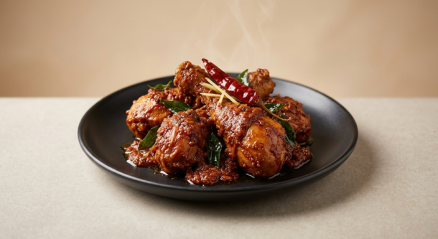
Ghee Roast is arguably the crown jewel of Coastal Karnataka cuisine — a dish born in Mangalore that has conquered tables across the country. Chicken pieces are slow-roasted in a fiery, tangy masala that coats every piece in a thick, burnished glaze, all enriched with generous pure ghee. Our Nati Ghee Roast Masala replicates the complex profile of this iconic dish, with byadgi chillies for deep colour and mild heat, tamarind for tartness, and garlic for pungency.
Ingredients
Instructions
- 1
Marinate the Chicken
Mix the chicken with curd, lemon juice, tamarind paste, and 1 tbsp of Ghee Roast Masala. Season with salt and marinate for 30 minutes minimum, or up to 4 hours in the refrigerator. The acid in the curd and tamarind begin to tenderise the chicken immediately.
- 2
Heat the Ghee
In a wide, thick-bottomed pan, heat 3 tbsp ghee on medium heat. When the ghee shimmers, add curry leaves (they will splutter) and crushed garlic. Fry the garlic on medium heat for 2–3 minutes until golden and fragrant — this infused ghee is the flavour foundation.
- 3
Add Masala Paste
Add the remaining Ghee Roast Masala to the ghee and cook on medium-low heat for 4–5 minutes, stirring constantly. The masala should deepen in colour (going from orange-red to a deep brick-red) and the ghee should begin to separate at the edges. Add jaggery and mix.
- 4
Add and Roast the Chicken
Add the marinated chicken to the masala. Mix to coat every piece thoroughly. Cook on medium-high heat for 5 minutes, searing the chicken in the masala. Reduce to medium, cover, and cook for 15 minutes, stirring every 5 minutes.
- 5
Roast Uncovered to Finish
Remove the lid and cook on medium-high heat for 8–10 minutes, stirring frequently. The masala should caramelise and cling to the chicken, and you should see the ghee separating. This is the critical roasting stage that gives the dish its signature dry, glazed finish.
- 6
Finish with Ghee and Serve
Drizzle the remaining 2 tbsp of ghee over the finished dish, toss with fresh curry leaves, and remove from heat. Serve immediately with neer dosa, appam, or steamed rice.
Pro Tips
- Don't rush the masala frying stage — cooking the masala in ghee until the fat separates is what develops the deep roasted flavour.
- Jaggery is essential; it balances the intense chilli heat and tamarind tartness.
- Ghee roast should be DRY — if it looks saucy, keep cooking uncovered on high heat.
- Use good quality pure desi ghee; it makes an enormous difference to the final flavour.
- Tastes exceptional the next day — the masala clings and deepens overnight.